
Private equity has long operated according to an almost unchangeable standard: high fees, which are not very flexible and rarely negotiable.
Today, Fundora is introducing a different approach.
Not by eliminating fees, that would be unrealistic, but by restructuring their logic.
The traditional model: a fixed structure
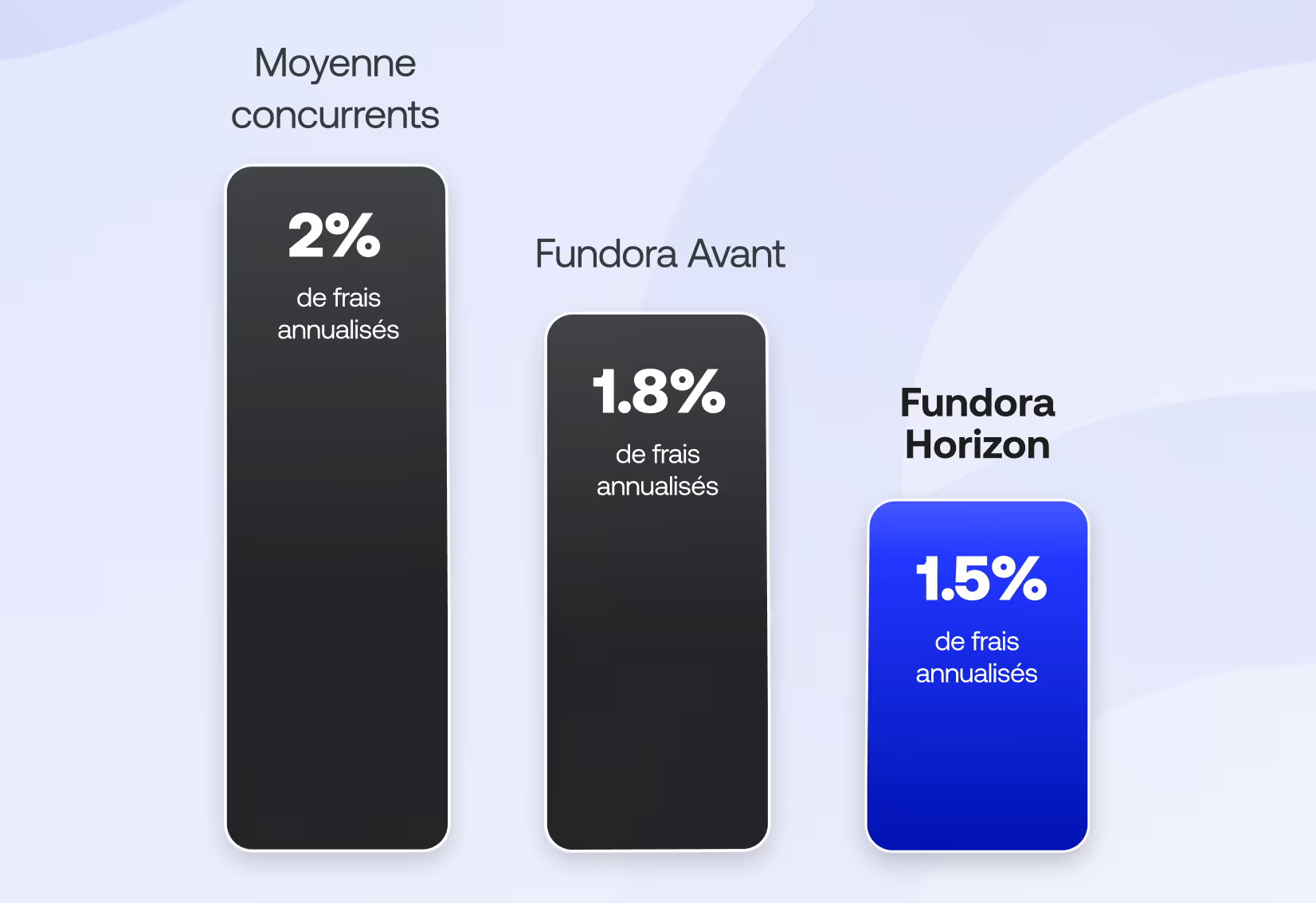
Historically, the majority of funds of private equity funds operate on a structure similar to the so-called “2 & 20” :
- Approximately 2% annual management fees
- 20% performance fee
- Additional entry fees (often between 2% and 5%)
- No customization according to the investor
This model is applied by most major international managers, and taken up by numerous platforms for accessing the unlisted.
The investor Accepts the structure.He Don't choose it.
What Fundora is changing
Fundora is based on three principles:
- Degressive fees according to the amount invested
- A transparent structure
- Two formulas to choose from: Classic and Horizon
Two formulas, two logics
Classic formula
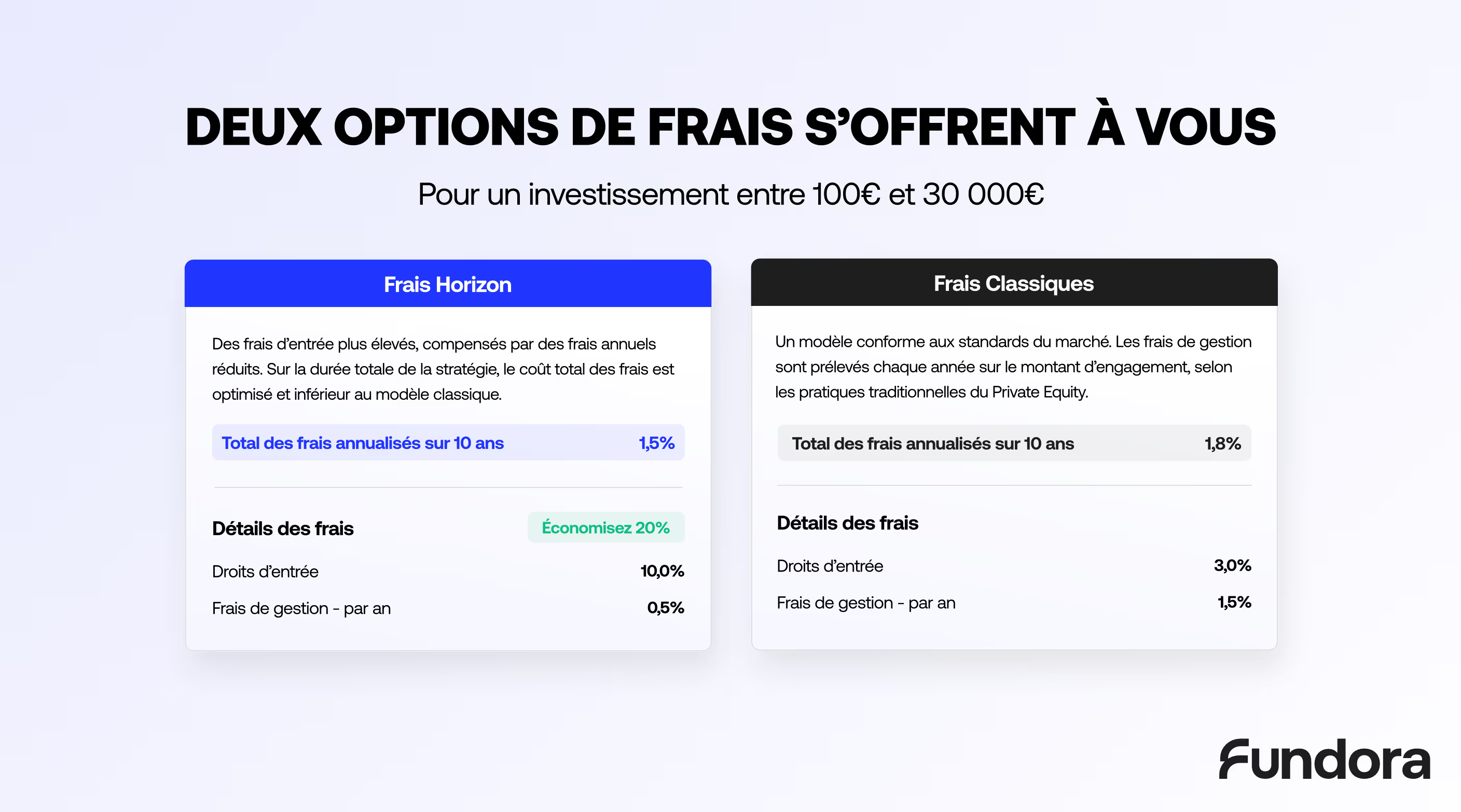
La Classic formula Follow the traditional logic :
- Lower entry fees
- Higher annual management fees
It allows limit the initial financial effort.
Example:
On an investment of less than 30,000€, fees can be structured around:
- 3% entrance fees
- 1.5% annual fees
This formula is often adapted when the investor favors a reduced initial cost.
Horizon Formula
La Horizon Formula Reverse the logic:
- Higher entry fees
- Reduced annual management fees
Always on an investment of less than 30,000€, the structure can be:
- 7 to 10% of admission fees
- 0.5% annual fee
The objective is clear: significantly reduce the burden of recurring costs over time.
Why is this difference important
In private equity, theInvestment horizon is long.
Often 5, 6 or even 10 years.
However, these are the annual fees which apply every year.
This also explains the rise of co-investment, whose fee structure is generally lighter than a comparable investment made through a fund.
La Horizon Formula therefore allows you to:
- Focus a larger portion of the costs at the start
- Alleviate recurring costs
- Adapting the structure to the long term
This logic is closer to certain institutional negotiations, which are rarely accessible to individuals.
Degressive fees according to the amount
A gradual reduction between €30,000 and €100,000
Another major evolution: the degressiveness.
The higher the amount invested, the lower the rates.
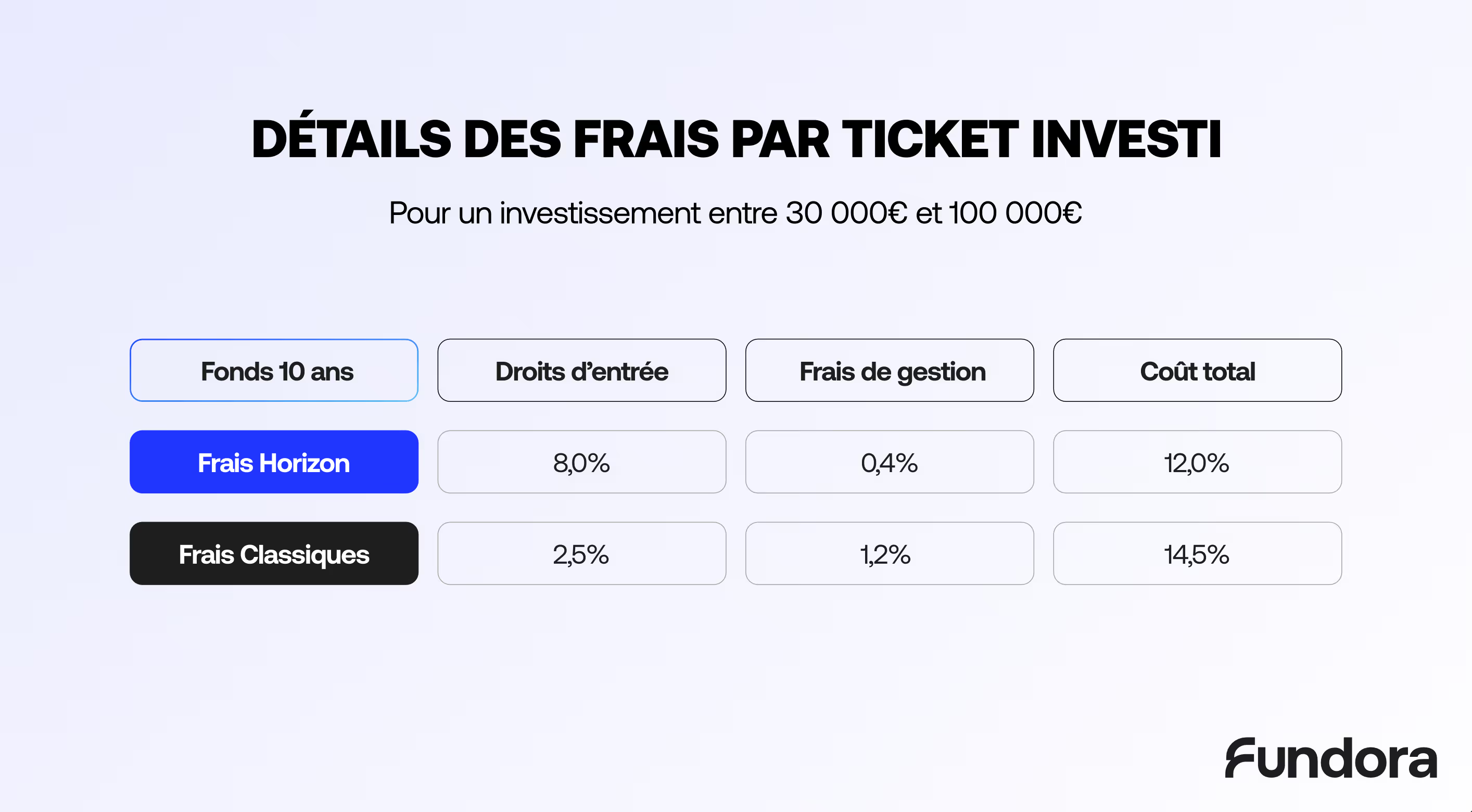
For an investment of less than 30,000€, the annual fees can be up to 1.5% in Classic Formula and get off at 0.5% in Formula Horizon.
Between €30,000 and €100,000, the structure becomes more advantageous:
- Annual fees can be reduced by up to 1.2% In Classic Formula
- And up to 0.4% In Formula Horizon
This intermediate bracket already marks a significant departure from the historical market standard.
Beyond €100,000: institutional positioning
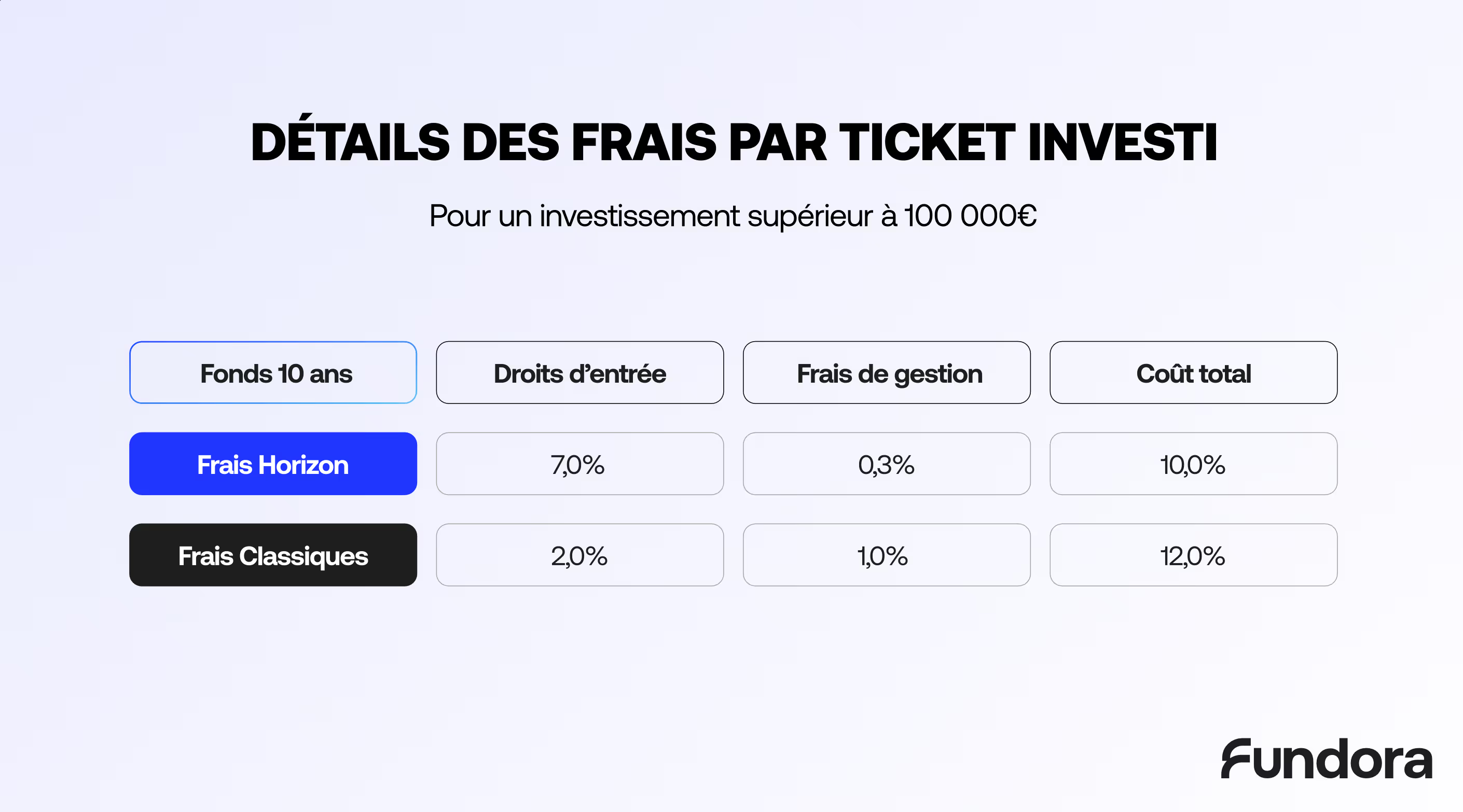
Starting from €100,000 invested, the degressiveness becomes even more pronounced:
- Annual management fees can be as low as 0.3%
- Admission fees may be reduced to 2% In Classic Formula
This annual fee level is lower than the historical standard of 2% per year practiced in many traditional funds.
This makes it possible to further align the pricing structure with standards usually reserved for institutional tickets.
Specific case: debt funds
Private debt strategies have a simpler structure:
- Shorter duration (3 years)
- A single formula
- Entry fees between 2% and 3%
- Annual fees between 1% and 1.5%
Management fees are taken directly from the coupons.
A logic of flexibility that is rare in the unlisted
In the majority of available private equity offers:
- The structure is unique
- The model is imposed
- The investor adapts to the fund
At Fundora:
- The strategy remains institutional
- But the fee structure becomes adaptable
It is this capacity for choice that constitutes true evolution.
What this means for the investor
The question is not only:
“What are the fees?”
But:
“How are they distributed over time?”
La Classic formula favors a reduced initial effort.
La Horizon Formula favors the optimization of recurring costs.
Each investor can thus align the fee structure with their wealth horizon.
In conclusion
Private equity does not have to be opaque to be structured. It does not have to be rigid to remain institutional.
With two formulas, sliding fees and total transparency, Fundora introduces a more flexible and more readable approach to the unlisted.
Like any private equity investment, there is a risk of capital loss and a risk of illiquidity. The long-term horizon remains a central element.
THE WAY TO ACCESS PRIVATE FUNDS
WE ANSWER YOUR QUESTIONS
%201.avif)
Recommended articles

Fundora: acquisition of Kyoseil Asset Management

Latest articles

Inheritance investment: the complete guide to investing your capital wisely


Investing in the United States: market, taxation and strategies for a French investor